
Welcome To LTC Minerals
Having been established in 2005, in Izmir - Turkey, LTC Minerals is a partner of the largest emery mine in Turkey.
Our Products
We export to USA, CANADA, UK, HOLLAND, DENMARK, THAILAND, GERMANY, PHILIPPINES, ETC...
- Natural Emery
- Granite
- Quartz
- Olivine
- Basalt
- Feldspar
- Garnet
- Andesite
- Decorative Stones
- Pebble Stones
Natural Emery
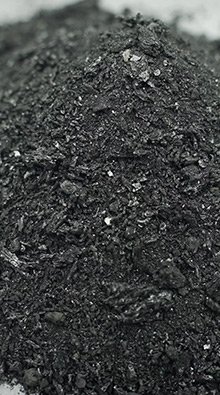
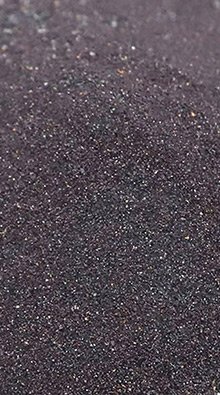
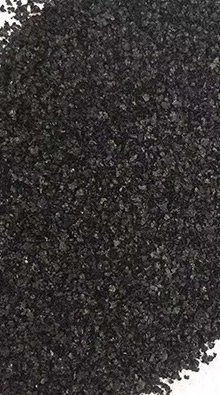
Natural emery is used as raw material for producing abrasive materials in various industries.
Applications
- Coated Abrasives
- Bonded Abrasives
- Cutting Wheels
- Grinding Wheels
Blasting System
- Sandblasting
- Millstones
- Grit Blasting
- Rice Milling
Main Export Markets
Canada, Holland, Italy, Germany, Czech Republic, Philippines, Thailand, UK, Denmark, Israel, Malta, Bulgaria, Romania, Hungary and Pakistan.
70% of natural emery mine reserves in the world are located in Turkey.
Typical Physical Properties
| Hardness | 8.0 – 8.5 Mohs |
| * Hardest mineral after diamond according to Mohs scale. | |
Chemical Analysis
| Al₂O₃ | 65.28% |
| Fe₂O₃ | 22.80% |
| SiO₂ | 6.07% |
| TiO₂ | 3.07% |
| CaO | 0.80% |
| MgO | 0.07% |
| Na2O | 0.37% |
| K2O | 0.12% |
| MnO | 0.02% |
| Loss On Ignition | 1.39% |
Packaging
| Packing can be supplied in 25 kg / 50 kg bags or 1000 kg bulk bags. |
Granite
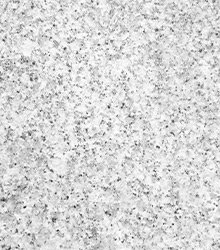
Granite is a common type of intrusive, felsic, igneous rock which is granular and phaneritic in texture. This rock consists mainly of quartz, mica, and feldspar. Engineers have traditionally used polished granite surface plates to establish a plane of reference, since they are relatively impervious and inflexible
Sandblasted concrete with a heavy aggregate content has an appearance similar to rough granite, and is often used as a substitute when use of real granite is impractical.
We supply Granite in various sizes and specs. Please contact us for details…
Quartz
There are many different varieties of quartz, several of which are semi-precious gemstones. Especially in Europe and the Middle East, varieties of quartz have been since antiquity the most commonly used minerals in the making of jewelry and hardstone carvings..
We supply Quartz in various sizes and specs. Please contact us for details…
Olivine
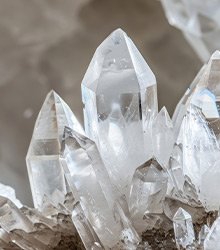
Olivine gets its name from typical green olives. The aluminium foundry industry uses olivine sand to cast objects in aluminium. Olivine sand requires less water than silica sands while still holding the mold together during handling and pouring of the metal. Less water means less gas (steam) to vent from the mold as metal is poured into the mold.
We supply Olivine in various sizes and specs. Please contact us for details…
Basalt
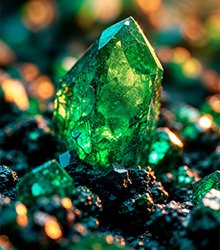
Basalt is used in construction (e.g. as building blocks or in the groundwork), making cobblestones (from columnar basalt) and in making statues. Heating and extruding basalt yields stone wool, an excellent thermal insulator.
We supply Basalt in various sizes and specs. Please contact us for details…
Feldspar
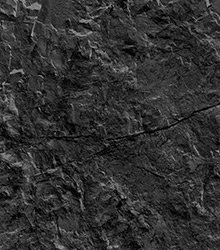
The name feldspar derives from the German words Feld, “field”, and Spath, “a rock that does not contain ore.” “Feldspathic” refers to materials that contain feldspar. The alternate spelling, felspar, has largely fallen out of use.
Feldspar is a common raw material used in glassmaking, ceramics, and to some extent as a filler and extender in paint, plastics, and rubber. In glassmaking, alumina from feldspar improves product hardness, durability, and resistance to chemical corrosion. In ceramics, the alkalis in feldspar (calcium oxide, potassium oxide, and sodium oxide) act as a flux, lowering the melting temperature of a mixture. Fluxes melt at an early stage in the firing process, forming a glassy matrix that bonds the other components of the system together.
Turkey is one of the biggest producers of the World.
In the US, about 66% of feldspar is consumed in glassmaking, including glass containers and glass fiber. Pottery (including electrical insulators, sanitaryware, tableware, and tile) and other uses, such as fillers, accounted for the remainder.We supply Feldspar in various sizes and specs. Please contact us for details
Garnet
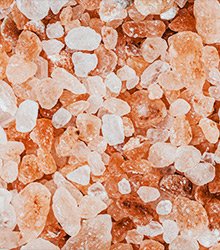
Garnet has been used as an abrasive since Bronze Age. It is widely used in sandblasting and water jet cutting. We supply Garnet in various sizes and specs. Please contact us for details.
Andesite
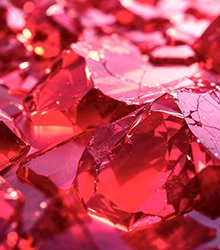
Andesite /ˈændəsaɪt/ is an extrusive igneous, volcanic rock, of intermediate composition, with aphanitic to porphyritic texture. In a general sense, it is the intermediate type between basalt and dacite, and ranges from 57 to 63% silicon dioxide (SiO2) as illustrated in TAS diagrams…
We supply Andesite in various sizes and specs. Please contact us for details…
Decorative Stones
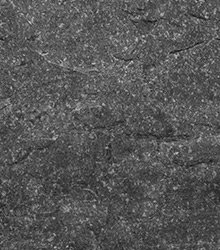
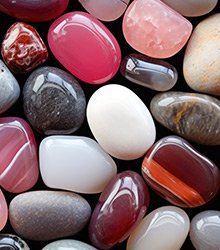
We supply various decorative stones used in landscaping and aquariums. We supply Ddecorative Stones in various sizes and specs. Please contact us for details.
Pebble Stones
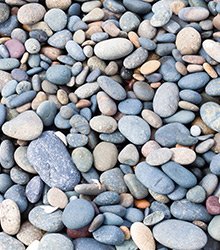
We supply decorative pebble stones / river stones for aquariums and landscapings. We supply Pebble Stones in various sizes and specs. Please contact us for details.
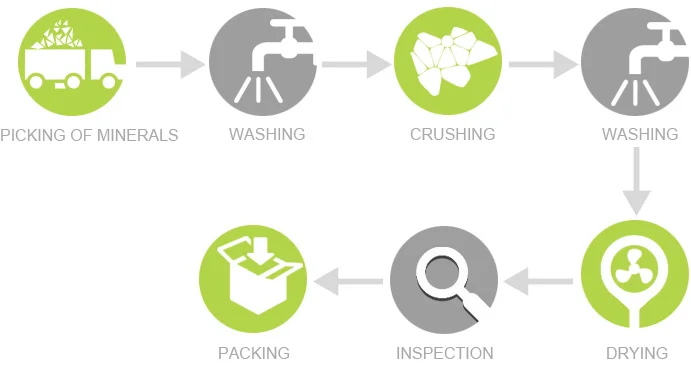
Process
This is how our whole process take place
Our production plant is located near Izmir giving easy access to Izmir Port. The factory lies on a huge area of 17.000 m2 with 500 m2 of closed space. Our well trained workers combined with high quality machinary enables us to produce minerals that meet the highest standards of the industry.

LTC Foreign Trade, with many trade connections throughtout the world especially in Europe, Middle East, and Far East, presents customized foreign trade services for domestic and foreign companies.
We bring the years, global experience, and stamina to guide our clients through new and often disruptive realities.